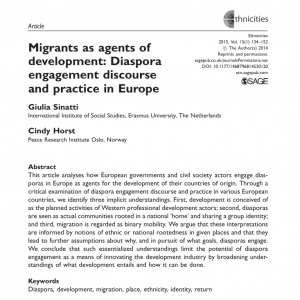


An increased focus on the role of diasporas as new agents in the development arena was noticeable in the first decade of the new millennium, when enthusiasm
about migrants’ potential for complementing mainstream development efforts rose among key development actors. This came at a time of increased debate on aid
effectiveness and growing interest in ‘new development actors’, including non-traditional donors and diasporas. This interest was further strengthened by emerging
diaspora investment trends and awareness, since the publication of the 2003 Global Financial report of the World Bank, that remittances far outweigh official development assistance (Raghuram, 2009: 104).
File Type:
pdf
File Size:
113 KB
Categories:
Cross-Cutting Migration Issues, Migration and Diaspora, ~ Show all documents