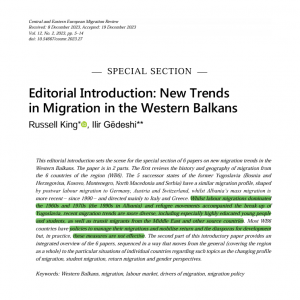


This editorial introduction sets the scene for the special section of 6 papers on new migration trends in the Western Balkans. The paper is in 2 parts. The first reviews the history and geography of migration from the 6 countries of the region (WB6). The 5 successor states of the former Yugoslavia (Bosnia and Herzegovina, Kosovo, Montenegro, North Macedonia and Serbia) have a similar migration profile, shaped by postwar labour migration to Germany, Austria and Switzerland, whilst Albania’s mass migration is more recent – since 1990 – and directed mainly to Italy and Greece. Whilst labour migrations dominated the 1960s and 1970s (the 1990s in Albania) and refugee movements accompanied the break-up of Yugoslavia, recent migration trends are more diverse, including especially highly educated young people and students, as well as transit migrants from the Middle East and other source countries.