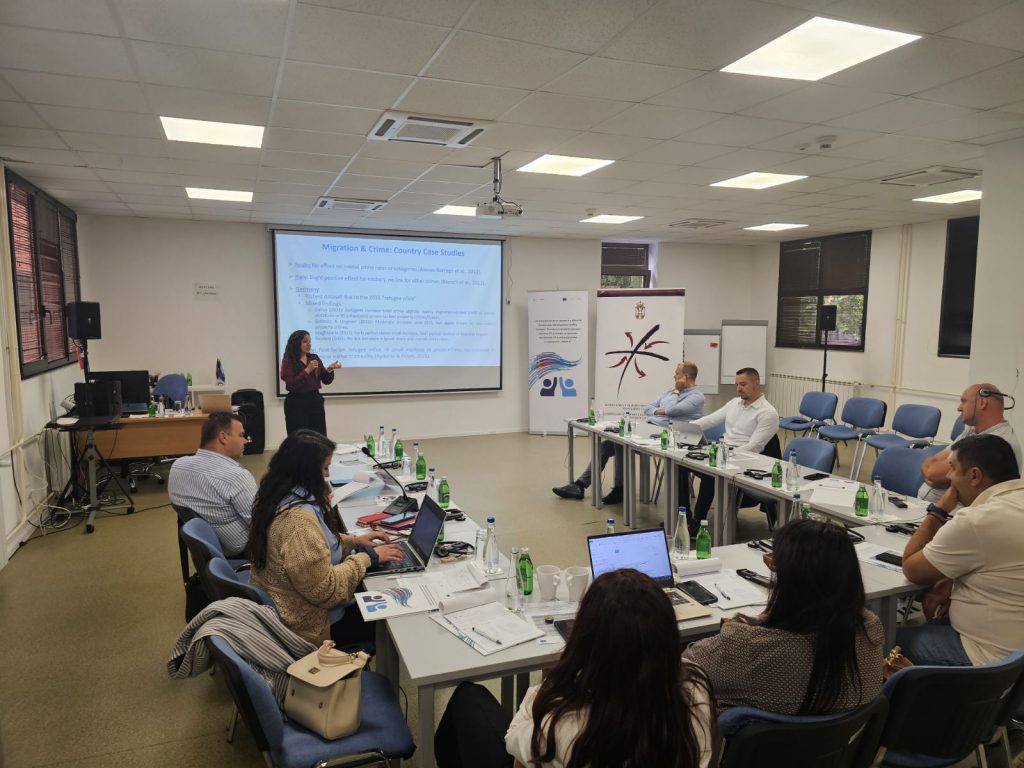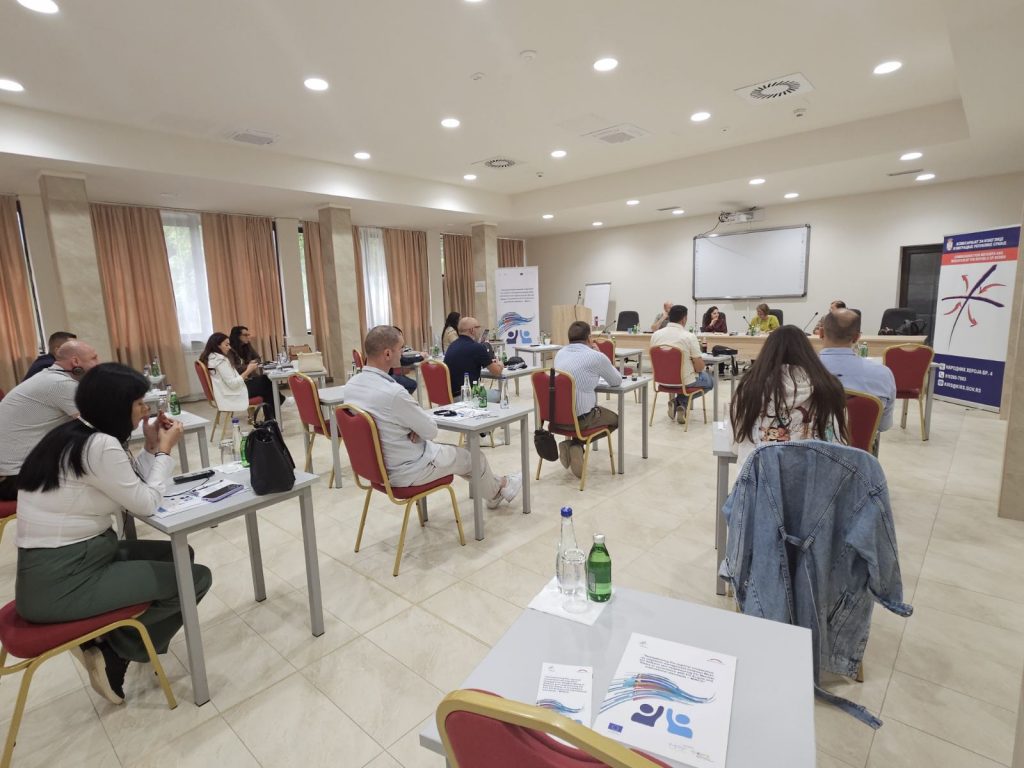

A two-day training for trainers was successfully held at the Regional Migration Training Centre in Plandiste, from 17-18th September 2025, as part of the project „Strengthening the regional cooperation on migration management between Western Balkans and neighbouring EU Member States in accordance with EU Acquis and international standards – MIRCO“
The two-day training covered two curricula: Legal Migration and Migration and Security. These curricula were developed in collaboration with Maastricht University, whose professors Melissa Siegel and Katrin Marchand led interactive workshops, group work, and plenary discussions over the two days.
The training gathered representatives of institutions that are beneficiaries of the MIRCO project – the Ministry of Internal Affairs of Montenegro, the Ministry of Security of Bosnia and Herzegovina, the Ministry of Internal Affairs of North Macedonia, as well as the host country’s beneficiary institution – the Commissariat for Refugees and Migration of the Republic of Serbia.
In addition to the mentioned curricula, new ones will also be developed within the MIRCO project, covering topics such as: Prevention of torture and protection of migrants’ rights; Protection of victims of human trafficking; Youth in migration; Combatting migrant smuggling; and Human rights. Trainings will be conducted both in person and via digital platform that will be established as part of the project.
The MIRCO project, which aims to strengthen regional cooperation in the areas of migration and asylum, as well as to build capacity for migration management in accordance with European standards, is co-financed by the European Union. The project is implemented by the Swedish Migration Agency (SMA), in cooperation with the Commissariat for Refugees and Migration of the Republic of Serbia, which participates as one of the key partners in its implementation.