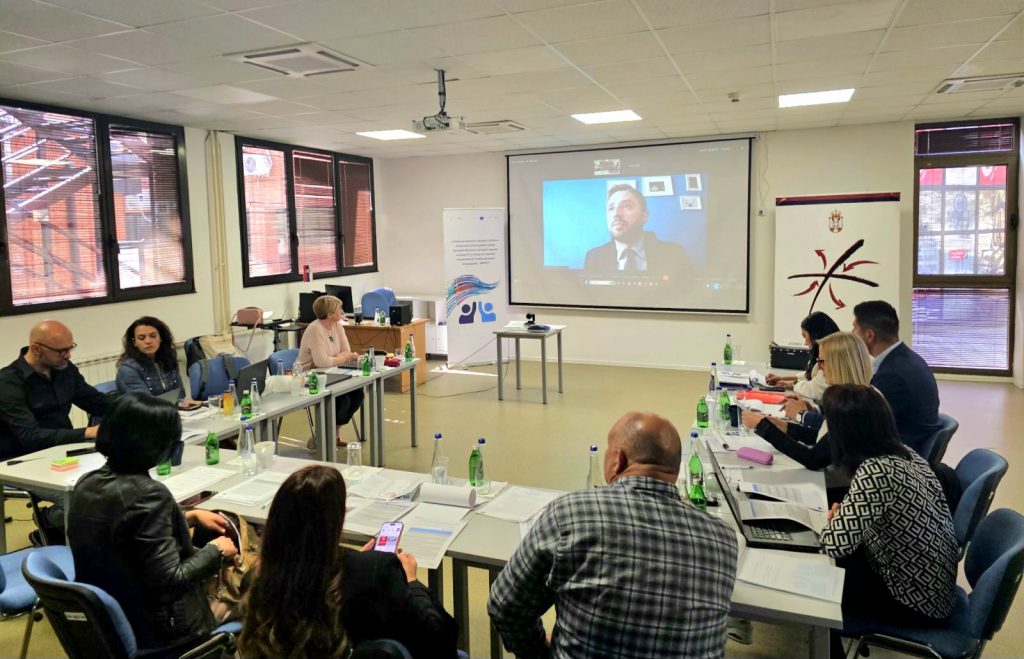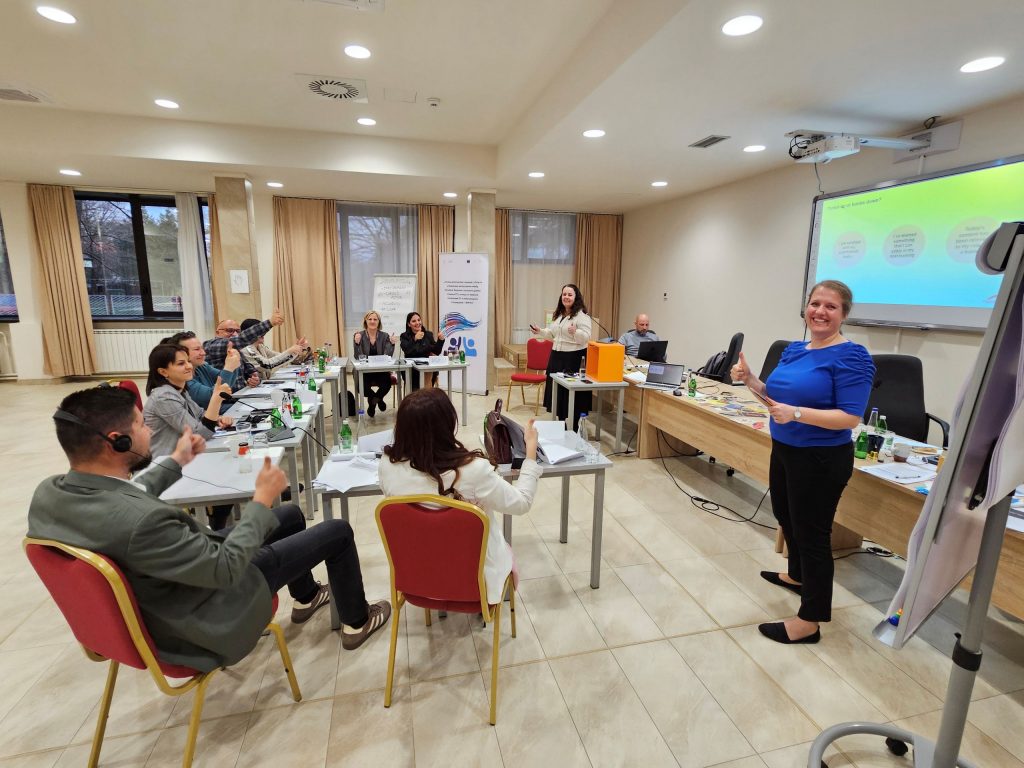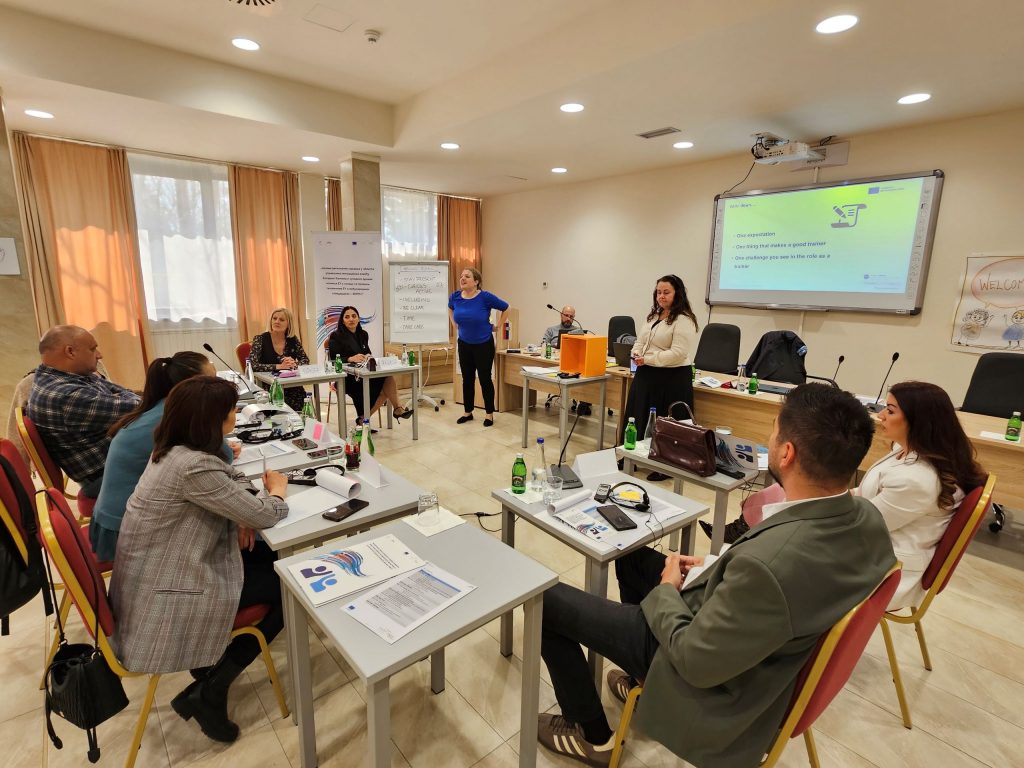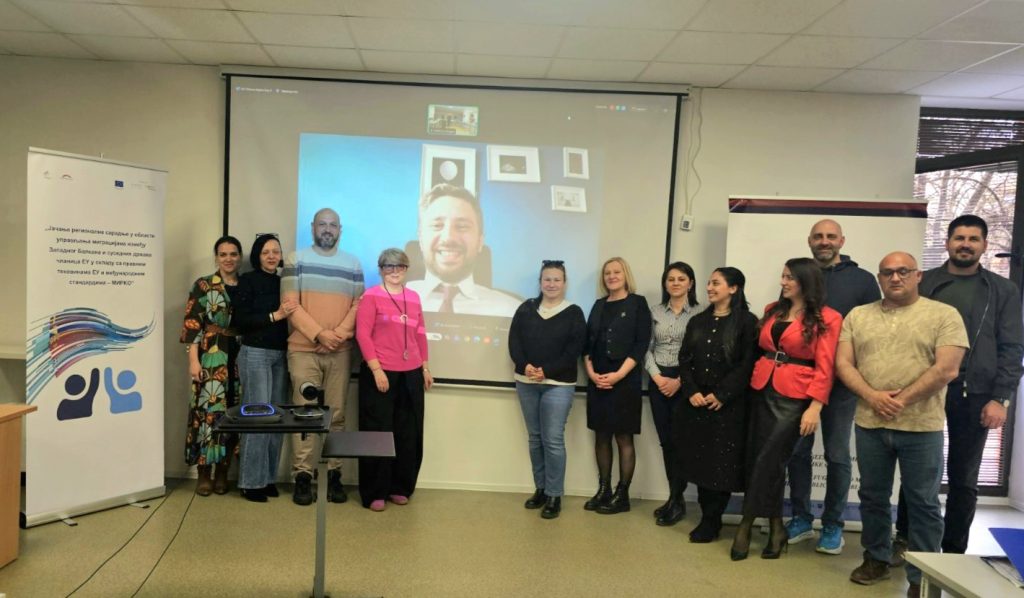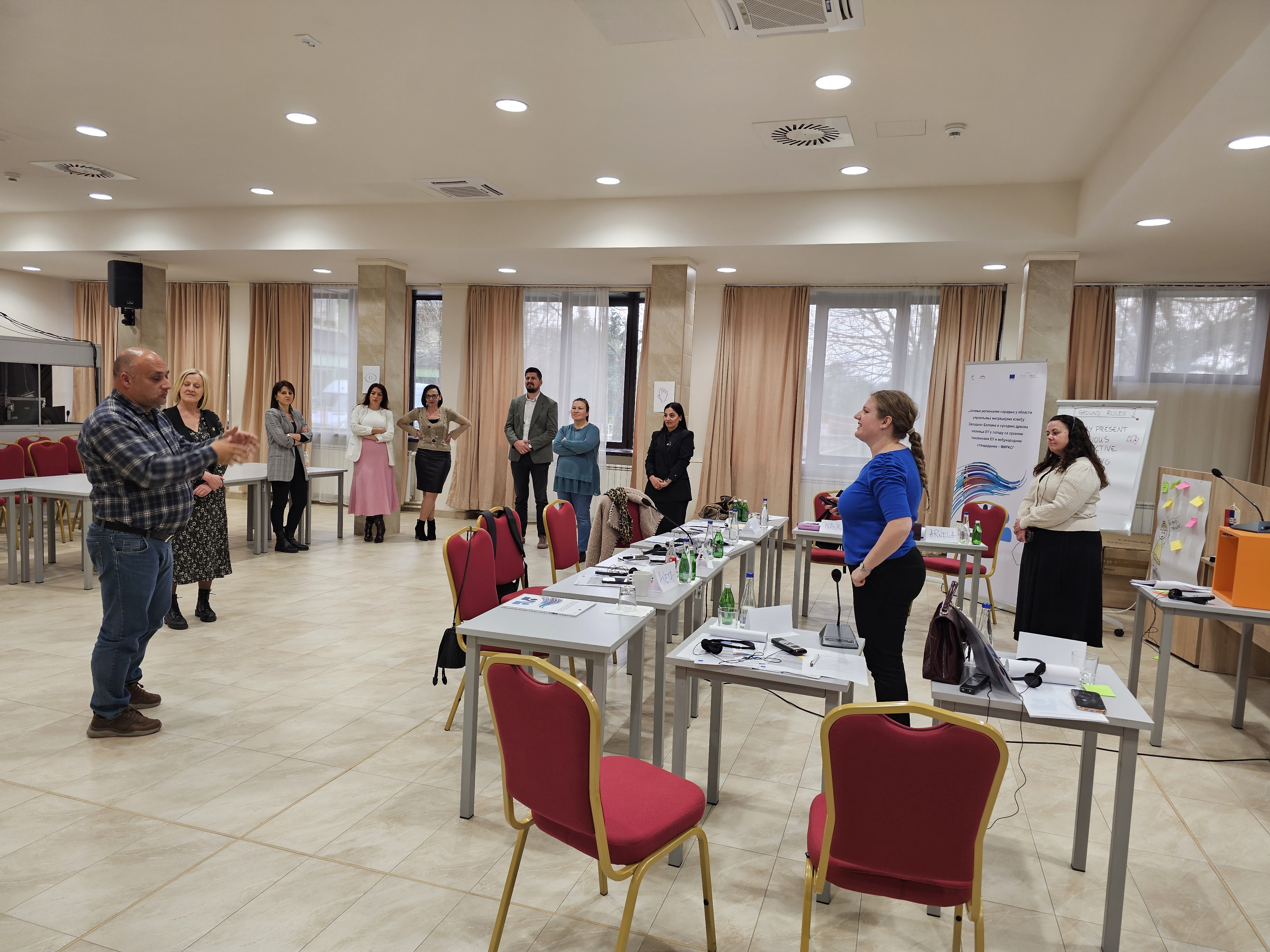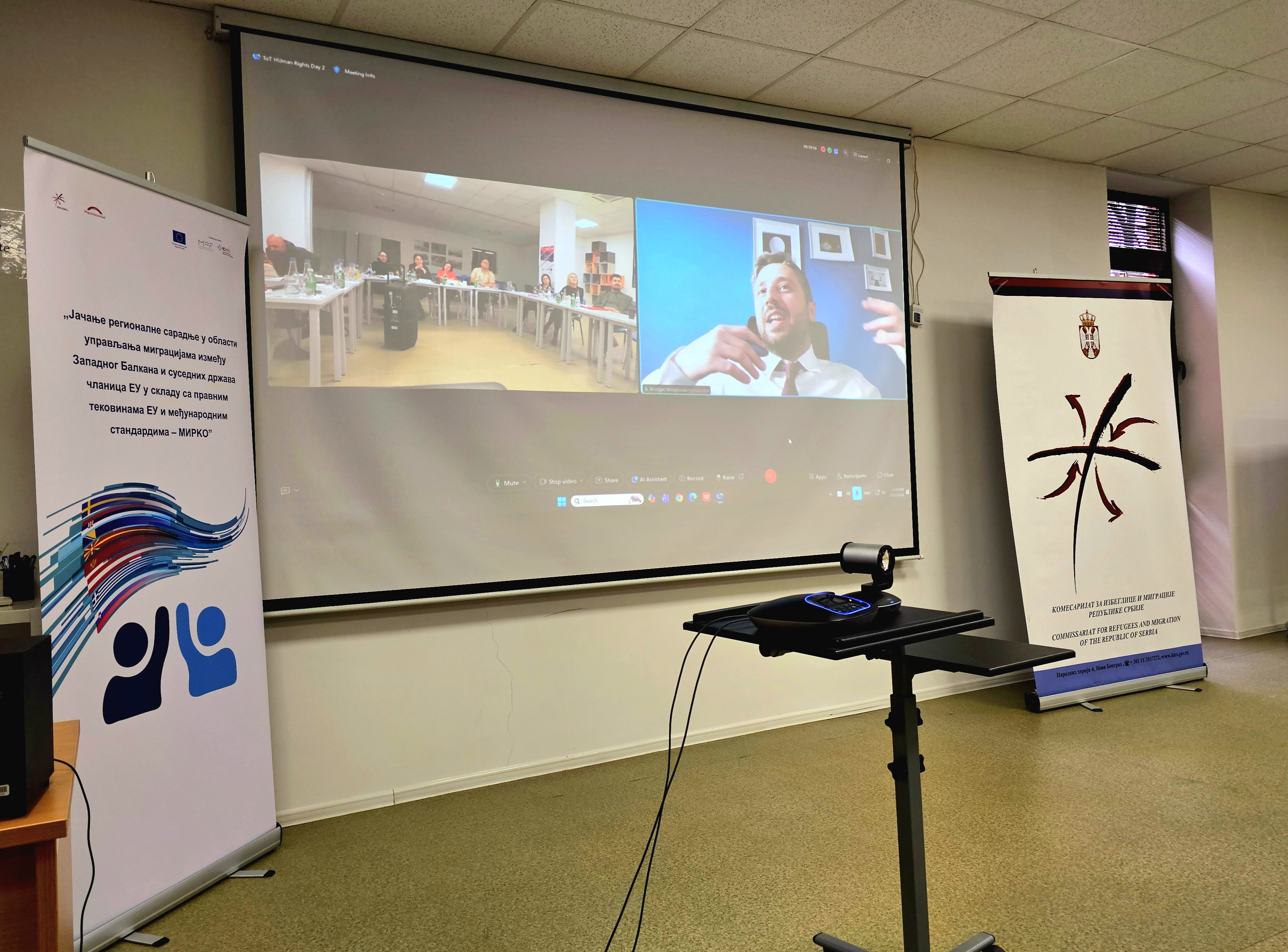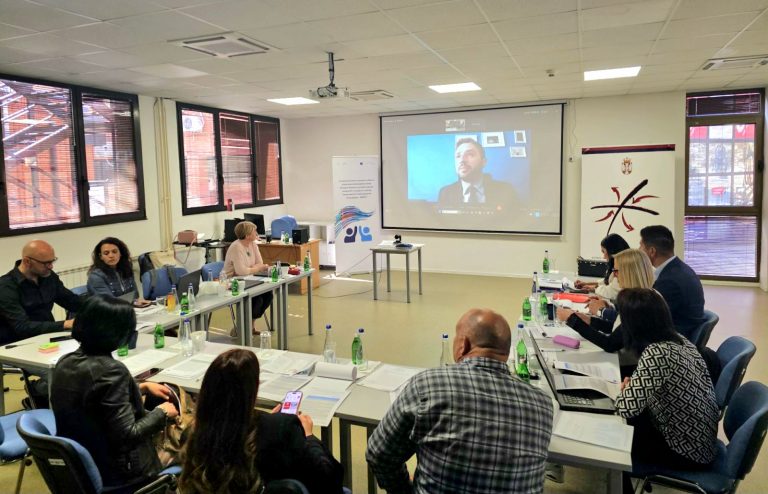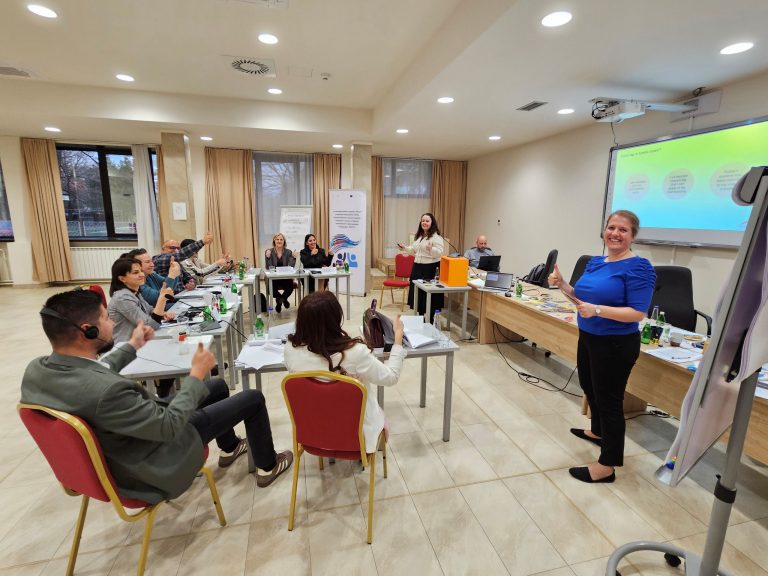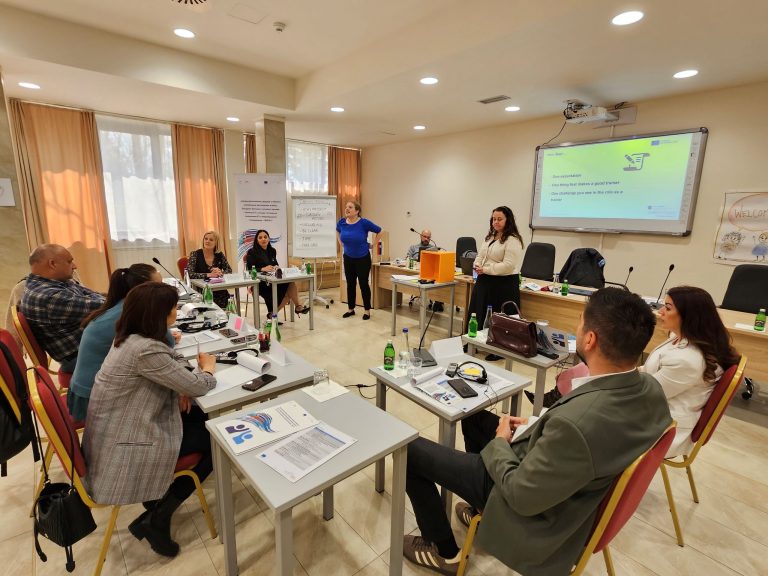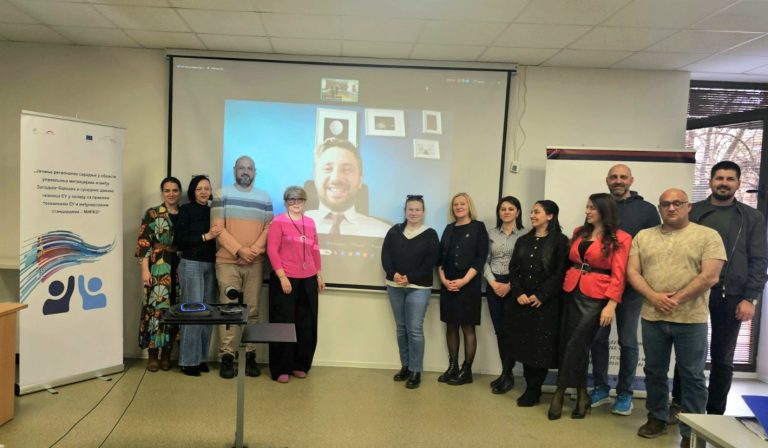



U Regionalnom centru za obuke u oblasti migracija u Plandištu, u periodu od 24. do 26. marta 2026. godine, uspešno je održana trodnevna obuka za trenere u okviru projekta „Jačanje regionalne saradnje u oblasti upravljanja migracijama između Zapadnog Balkana i susednih država članica EU, u skladu sa pravnim tekovinama EU i međunarodnim standardima – MIRKO”.
Obuka za trenere bila je posvećena temi „Migracije i ljudska prava”, sa ciljem jačanja kapaciteta učesnika u oblasti zaštite ljudskih prava u migracionom kontekstu, kao i unapređenja njihovih veština za prenos znanja u okviru matičnih institucija.
Program je okupio predstavnike institucija koje su krajnji korisnici MIRKO projekta sa Zapadnog Balkana – Ministarstva unutrašnjih poslova Severne Makedonije, Ministarstva unutrašnjih poslova Crne Gore, kao i korisničke institucije domaćina – Komesarijata za izbeglice i migracije Republike Srbije. Na obuci su učestvovali i predstavnici Ministarstva za ljudska prava i izbeglice Bosne i Hercegovine, čime je dodatno potvrđen značaj uključivanja različitih relevantnih institucija u jačanje regionalne saradnje, razmenu iskustava i unapređenje zajedničkih odgovora na migracione izazove.
Prva dva dana bila su usmerena na pružanje sveobuhvatne teorijske i normativne osnove o preseku migracija i međunarodnog prava ljudskih prava, uz analizu ključnih principa i standarda u ovoj oblasti. Predavanja, interaktivne radionice i diskusije vodio je Kristijan Mihajlovski iz Međunarodnog instituta za humanitarno pravo (International Institute of Humanitarian Law – IIHL) iz Sanrema, Italija. Treći dan bio je posvećen razvoju veština vođenja obuka i jačanju kapaciteta učesnika za efikasan prenos znanja. Ovaj deo programa realizovale su Sandra Jansson i Jasmina Turčalo iz Švedske agencije za migracije.
MIRKO projekat ima za cilj jačanje regionalne saradnje u oblasti migracija i azila, kao i unapređenje kapaciteta za upravljanje migracijama na Zapadnom Balkanu u skladu sa evropskim standardima.
Training of Trainers on Migration and Human Rights Held at the Regional Migration Training Centre in Plandište
At the Regional Migration Training Centre in Plandište, a three-day Training of Trainers was successfully held from 24 to 26 March 2026, within the framework of the project “Strengthening Regional Cooperation in Migration Management between the Western Balkans and Neighboring EU Member States in line with the EU acquis and international standards – MIRCO”.
The Training of Trainers focused on the topic “Migration and Human Rights”, with the aim of strengthening participants’ capacities in the field of human rights protection in the migration context, as well as enhancing their skills for transferring knowledge within their respective institutions.
The programme brought together representatives of the final beneficiary institutions of the MIRKO project from the Western Balkans – the Ministry of Interior of North Macedonia, the Ministry of Interior of Montenegro, as well as the host beneficiary institution – the Commissariat for Refugees and Migration of the Republic of Serbia. Representatives of the Ministry for Human Rights and Refugees of Bosnia and Herzegovina also participated in the training, further confirming the importance of involving various relevant institutions in strengthening regional cooperation, exchanging experiences and improving joint responses to migration challenges.
The first two days were dedicated to providing a comprehensive theoretical and normative foundation on the intersection of migration and international human rights law, including an analysis of key principles and standards in this field. Lectures, interactive workshops and discussions were led by Kristijan Mihajlovski from the International Institute of Humanitarian Law (IIHL), Sanremo, Italy. The third day focused on developing training delivery skills and strengthening participants’ capacities for effective knowledge transfer. This part of the programme was conducted by Sandra Jansson and Jasmina Turčalo from the Swedish Migration Agency.
The MIRCO project, aims to strengthen regional cooperation in the areas of migration and asylum, as well as to build capacity for migration management in the Western Balkans in accordance with European standards.