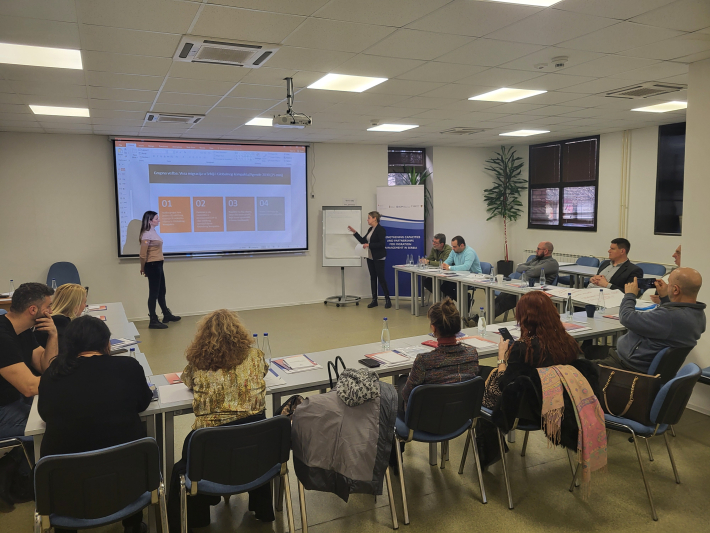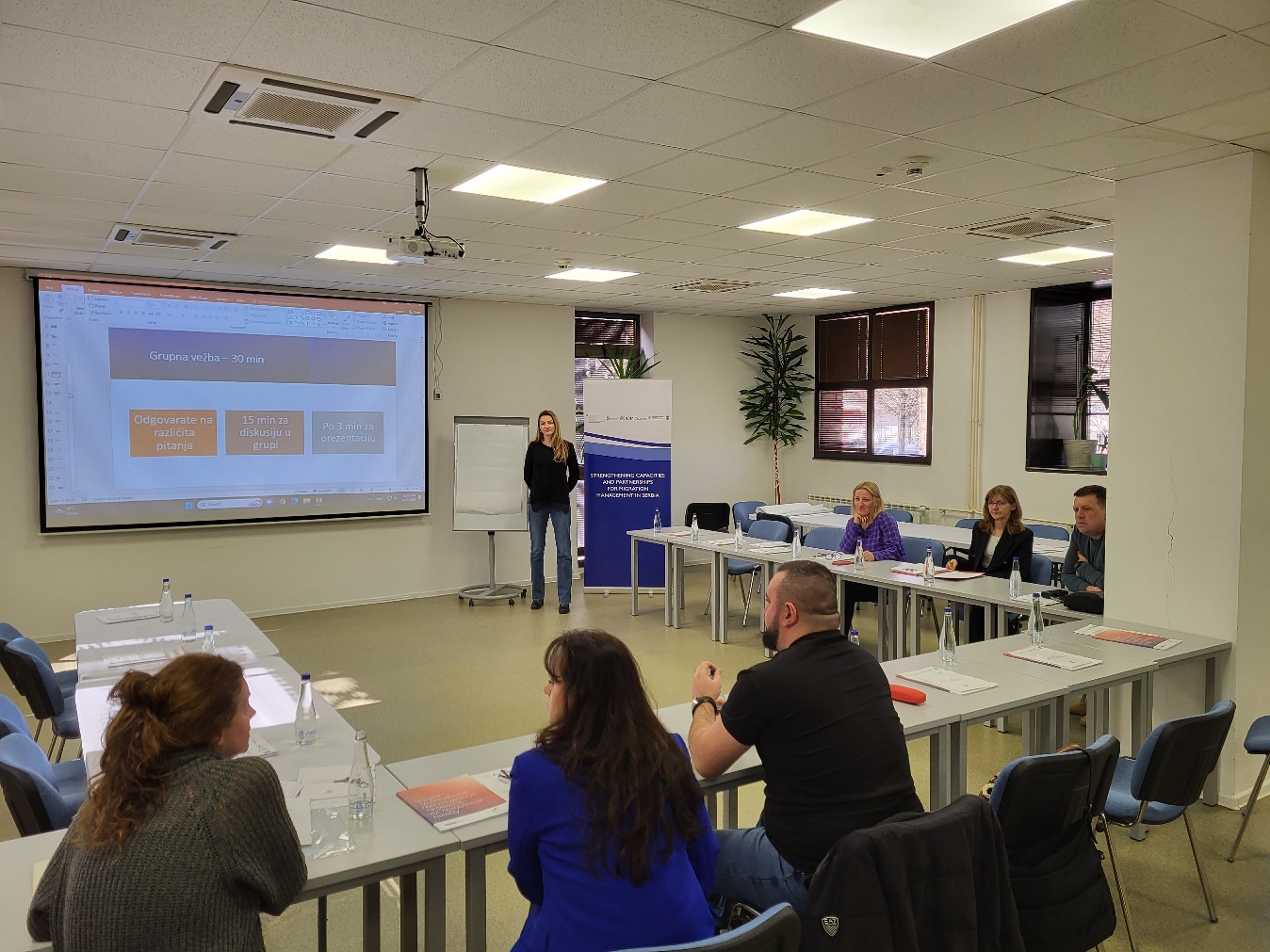


As part of the project “Strengthening Capacities and Partnerships for Migration Management in Serbia,” implemented by the Commissariat in partnership with the International Organization for Migration (IOM) and supported by the Swiss Agency for Development and Cooperation (SDC), four training sessions were held in January and February at the training center in Plandište. These sessions were attended by representatives from 26 local self-government units, with the goal of enhancing their capacities and expanding their knowledge in the field of migration management.
The training, titled “Local Action Plans for Improving the Position of Different Categories of Migrants,” covered various topics that had not previously been the focus of local action planning in the field of migration. These topics included challenges related to economic migration, cooperation with the diaspora, human trafficking, demographic issues, and more. The training was primarily intended for members of local Migration Councils, which have been established to provide advisory services regarding migration management at the local self-government level. In this regard, the training was valuable both for new members of project teams and working groups responsible for drafting local action plans—who were encountering these topics for the first time—and for more experienced members, for whom the training served as a refresher and an opportunity to learn about new trends in migration management.
Changes in the migration context have necessitated the revision of old and the development of new Local Action Plans (LAPs). In addition to the ongoing challenges of forced migration (refugees, internally displaced persons, and irregular migration), Serbia is also facing significant external migration of its population, depopulation, a large number of regular and irregular returnees, as well as substantial internal migration. Therefore, integrating new categories of migrants into local public policy documents is particularly important to mitigate potential negative effects and strengthen the positive impact of migration on local development.
The training on local action planning, which the Commissariat has conducted 14 times as part of this project, has been successfully completed by 149 officials from a total of 70 municipalities and cities.